





Available For Work


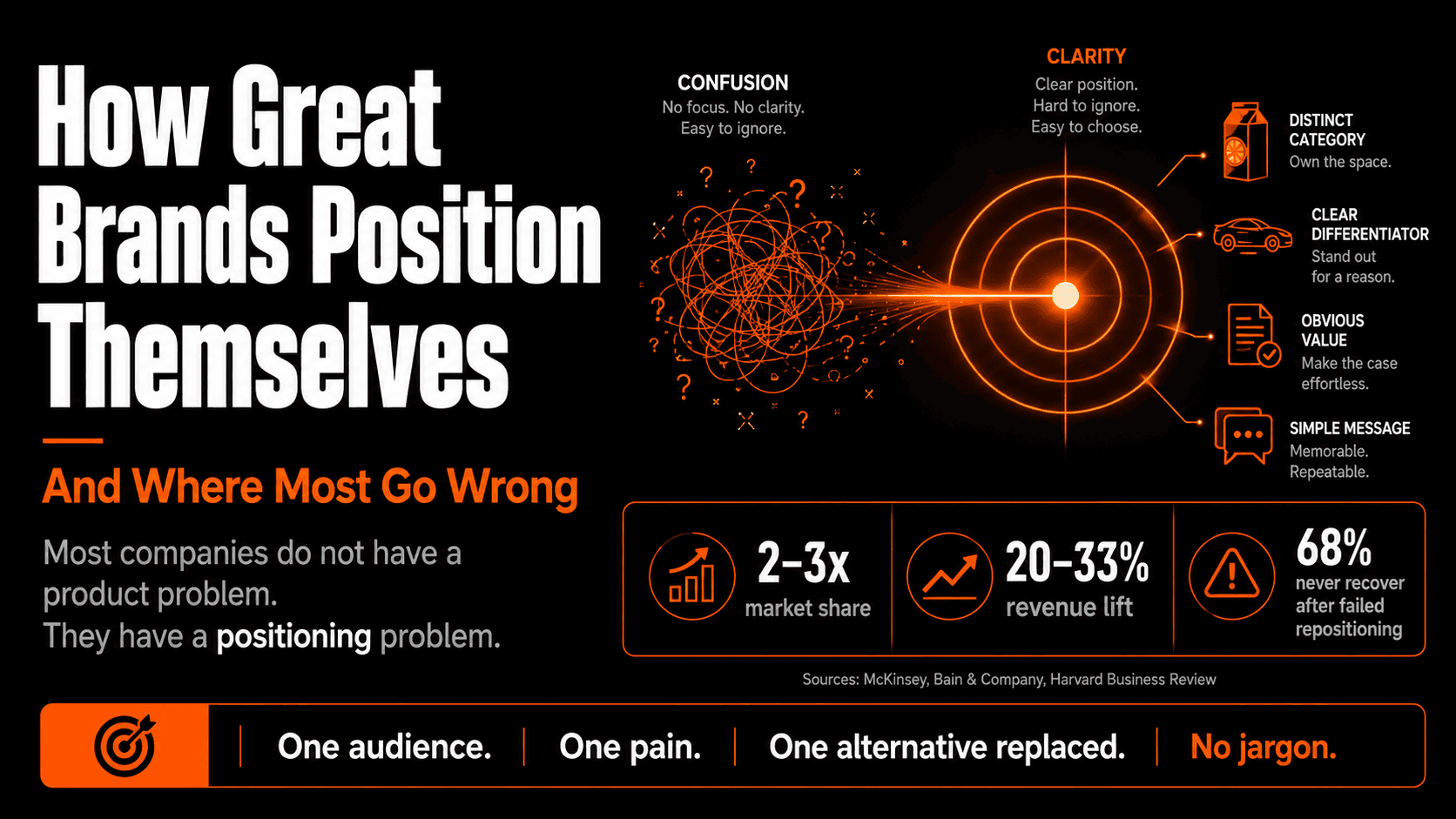
How Great Brands Position Themselves (And Where Most Go Wrong)
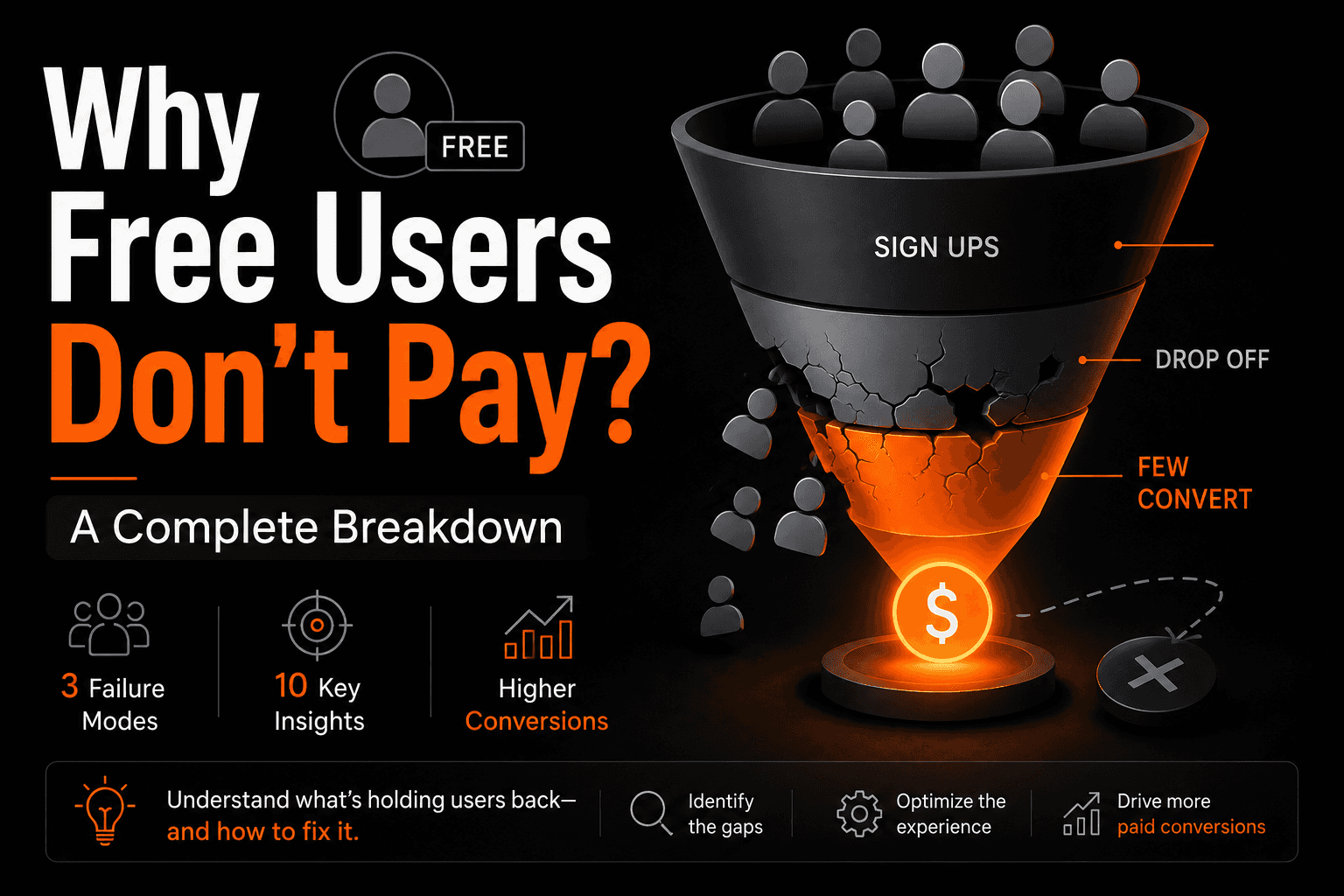
Most SaaS products convert between 2 and 5% of free users into paying customers.
Founders who see that number typically do one of two things. They lower the price. Or they add more features to the paid tier. Both moves miss the actual problem.
A low freemium conversion rate is almost never a pricing problem. It is a product design problem. Specifically, it is a problem with who you are attracting, when you are asking, and where you have drawn the line between free and paid.
Four products have cracked this: Loom, Grammarly, Beehiiv, and Calendly. Each uses a different mechanic. Each converts well above the industry average. And each teaches a reusable lesson you can apply to your own product.
This is a full breakdown of what they do, why it works, and how to find your own version of the same approach.
Why the Average Freemium Conversion Rate Is So Low
The harsh truth is that 95 to 98% of free users will never convert to paying customers. That is not a pessimistic take. That is the baseline reality for most SaaS products operating a freemium model.
The reasons are predictable once you know what to look for. It usually comes down to one of three things: a lack of fit between what the user expects and what the product offers, a broken activation experience where users never get to the true value of the product, or an activation process built entirely with conversion in mind instead of building habits in the user.
In plain terms: wrong users, wrong timing, wrong design.
The good news is that all three are fixable. And the products that have fixed them are doing it in ways you can observe, dissect, and apply.
The 3 Real Reasons Free Users Never Become Paid Users
Reason 1: Wrong users signed up
Your free plan is a magnet. The question is what it is attracting.
If the free tier solves the user's problem completely, there is no reason to ever pay. You have built a useful product for people who will remain free users indefinitely. That is not a retention win. It is a revenue problem.
No one signs up for a free trial to learn more about your product. They sign up to learn how your product benefits them. If the benefit they receive from the free tier is complete enough, the paid tier becomes irrelevant to them.
The fix is not to make the free tier worse. It is to design the free tier for your ICP specifically. The free tier should be useful enough to attract serious users and incomplete enough to frustrate casual ones. Grammarly does this almost perfectly. Casual writers are happy with basic spell-check. Professionals writing client proposals, job applications, or content that carries real stakes are not. The free tier self-selects for the users most likely to pay, automatically.
Reason 2: The upgrade ask came at the wrong moment
Timing the upgrade prompt is one of the most underestimated levers in SaaS growth.
Most products show the upgrade prompt in one of two places. Either on a generic pricing page the user navigates to voluntarily, or in a pop-up that fires on a schedule regardless of what the user is actually doing. Neither converts well because neither is timed to a moment of felt need.
Loom gives users a nudge to upgrade right when they finish recording a video, at the exact moment they may realise how unflattering their filler words sound and want to fix them. That is not an interruption. That is an answer to a problem the user just discovered. The timing transforms the upgrade prompt from a sales ask into a solution.
Calendly takes the same principle and applies it differently. The free tier gives users full scheduling functionality. The paywall sits at the calendar embed feature, which allows users to embed their booking link directly on their website. That feature only becomes relevant when a user's meeting volume is growing and they want a more professional setup. By that point, Calendly is already central to their workflow. The ask arrives exactly when the need is undeniable.
The goal is to make the upgrade feel like a reward, not a punishment. When users hit a limit, the best paywalls say, "you are growing, here is how to keep going" rather than "you cannot continue until you pay."
H3: Reason 3: The free plan gave away too much
This is the failure mode that is hardest to diagnose because it feels like generosity.
Giving users a generous free tier builds goodwill. It drives word of mouth. It accelerates top-of-funnel growth. All of that is true. But if the free tier is so complete that users never hit a meaningful ceiling, conversion stalls.
Beehiiv's free plan allows you to have up to 2,500 email subscribers on your list. After that you have to upgrade to a paid plan even if you don't care about any of the additional features.
That cap is not arbitrary. It is precisely calibrated. A newsletter with 2,500 subscribers is a newsletter that is working. The creator has an audience. They are thinking about monetisation, referral programmes, and growth tools. All of those sit behind the paid tier. By the time a user hits that cap, they have already built something they do not want to lose. Upgrading feels like the logical next step, not a fee for continued access.
The principle here is gating at the point of user success rather than user frustration. A frustrated user looks for alternatives. A successful user who needs more capacity upgrades and stays.
What These Products Have in Common
Loom, Grammarly, Beehiiv, and Calendly each use a different mechanic. But the underlying logic is identical.
None of them ask when it is convenient for the business. They ask when the user needs them most.
Good upgrade triggers make users naturally see the value of premium features. Prompts work best when they surface right as someone needs a premium feature.
That sounds obvious. Most products do not do it. Most products design the free tier and the paid tier in isolation, then add a pricing page in between and hope conversion happens. It does not.
The conversion trigger is not a pricing decision. It is a product design decision. It belongs in the same conversation as activation design, onboarding flow, and feature gating, not in a marketing meeting about pricing strategy.
How to Find Your Own Freemium Conversion Trigger
You do not need to copy any of these mechanics directly. What you need is to find the equivalent moment in your own product. Here is a three-step process to do that:
Step 1: Identify your activation moment
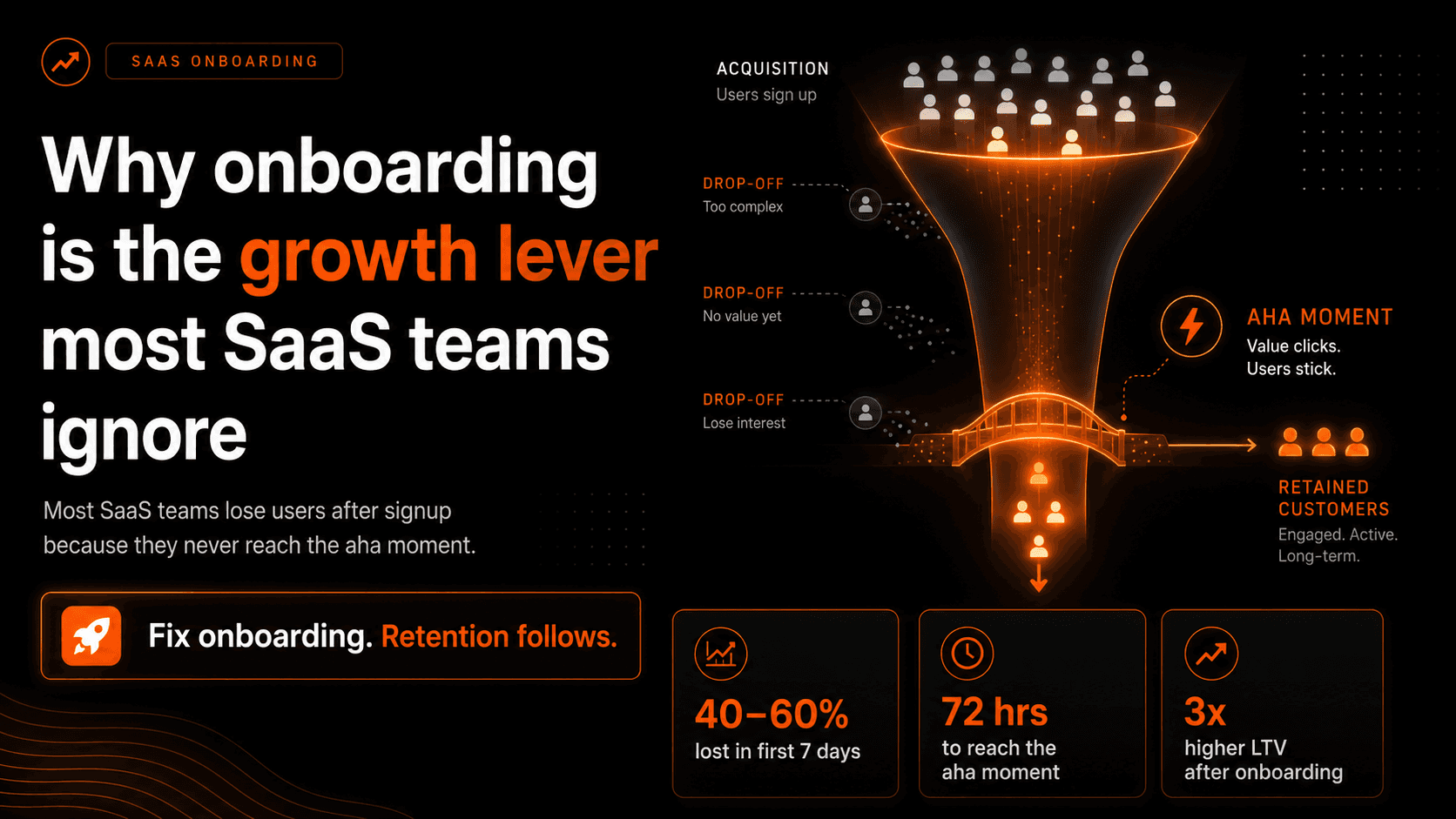
What is the single action that separates users who get real value from users who signed up and disappeared? That action is your activation moment. Users who engage with core features within the first week are 5x more likely to convert than those who do not. Find what that core action is for your product. Everything in your onboarding should point toward it.
Step 2: Map the moment of felt need
The activation moment and the moment of felt need are not always the same. The activation moment is when the user first gets value. The moment of felt need is when the user first hits a limit that matters to them.
Talk to your free users. Ask them: when did you first wish the free plan did more? That answer tells you where the upgrade prompt belongs.
Step 3: Gate right after the success moment
The paywall should not arrive before the user understands the product's value. It should not arrive so late that the user has already found a workaround or lost interest. It should arrive at the exact moment the user has experienced something worth paying to continue.
Design the free tier to deliver one clear success. Then gate the natural next step.
The Conversion Rate Question You Should Actually Be Asking
Most founders track freemium conversion rate as a single number. That is the wrong unit of measurement.
A 3% conversion rate from organic, high-intent traffic might be outstanding. A 3% conversion rate from paid social traffic full of unqualified signups is a disaster. The same number tells completely different stories depending on who is in the funnel.
The more useful question is not "what is our conversion rate?" It is "what is the one action in our product that predicts whether a free user will eventually pay?"
Find that action. Instrument it. Build your onboarding toward it. Put the upgrade gate right after it.
That single change will do more for your freemium conversion rate than any pricing experiment, email sequence, or discount campaign.
Final Thought
The freemium model does not fail because products are bad. It fails because the design of the free tier is treated as a marketing decision rather than a product decision.
Loom, Grammarly, Beehiiv, and Calendly each made the conversion trigger a first-class product decision. The result is conversion rates that sit comfortably above industry average, not because of aggressive upselling but because of precise timing and intentional design.
The pricing page is not where conversion happens. The moment right before it is.
Find that moment in your product. Everything else follows.
Most SaaS products convert between 2 and 5% of free users into paying customers.
Founders who see that number typically do one of two things. They lower the price. Or they add more features to the paid tier. Both moves miss the actual problem.
A low freemium conversion rate is almost never a pricing problem. It is a product design problem. Specifically, it is a problem with who you are attracting, when you are asking, and where you have drawn the line between free and paid.
Four products have cracked this: Loom, Grammarly, Beehiiv, and Calendly. Each uses a different mechanic. Each converts well above the industry average. And each teaches a reusable lesson you can apply to your own product.
This is a full breakdown of what they do, why it works, and how to find your own version of the same approach.
Why the Average Freemium Conversion Rate Is So Low
The harsh truth is that 95 to 98% of free users will never convert to paying customers. That is not a pessimistic take. That is the baseline reality for most SaaS products operating a freemium model.
The reasons are predictable once you know what to look for. It usually comes down to one of three things: a lack of fit between what the user expects and what the product offers, a broken activation experience where users never get to the true value of the product, or an activation process built entirely with conversion in mind instead of building habits in the user.
In plain terms: wrong users, wrong timing, wrong design.
The good news is that all three are fixable. And the products that have fixed them are doing it in ways you can observe, dissect, and apply.
The 3 Real Reasons Free Users Never Become Paid Users
Reason 1: Wrong users signed up
Your free plan is a magnet. The question is what it is attracting.
If the free tier solves the user's problem completely, there is no reason to ever pay. You have built a useful product for people who will remain free users indefinitely. That is not a retention win. It is a revenue problem.
No one signs up for a free trial to learn more about your product. They sign up to learn how your product benefits them. If the benefit they receive from the free tier is complete enough, the paid tier becomes irrelevant to them.
The fix is not to make the free tier worse. It is to design the free tier for your ICP specifically. The free tier should be useful enough to attract serious users and incomplete enough to frustrate casual ones. Grammarly does this almost perfectly. Casual writers are happy with basic spell-check. Professionals writing client proposals, job applications, or content that carries real stakes are not. The free tier self-selects for the users most likely to pay, automatically.
Reason 2: The upgrade ask came at the wrong moment
Timing the upgrade prompt is one of the most underestimated levers in SaaS growth.
Most products show the upgrade prompt in one of two places. Either on a generic pricing page the user navigates to voluntarily, or in a pop-up that fires on a schedule regardless of what the user is actually doing. Neither converts well because neither is timed to a moment of felt need.
Loom gives users a nudge to upgrade right when they finish recording a video, at the exact moment they may realise how unflattering their filler words sound and want to fix them. That is not an interruption. That is an answer to a problem the user just discovered. The timing transforms the upgrade prompt from a sales ask into a solution.
Calendly takes the same principle and applies it differently. The free tier gives users full scheduling functionality. The paywall sits at the calendar embed feature, which allows users to embed their booking link directly on their website. That feature only becomes relevant when a user's meeting volume is growing and they want a more professional setup. By that point, Calendly is already central to their workflow. The ask arrives exactly when the need is undeniable.
The goal is to make the upgrade feel like a reward, not a punishment. When users hit a limit, the best paywalls say, "you are growing, here is how to keep going" rather than "you cannot continue until you pay."
H3: Reason 3: The free plan gave away too much
This is the failure mode that is hardest to diagnose because it feels like generosity.
Giving users a generous free tier builds goodwill. It drives word of mouth. It accelerates top-of-funnel growth. All of that is true. But if the free tier is so complete that users never hit a meaningful ceiling, conversion stalls.
Beehiiv's free plan allows you to have up to 2,500 email subscribers on your list. After that you have to upgrade to a paid plan even if you don't care about any of the additional features.
That cap is not arbitrary. It is precisely calibrated. A newsletter with 2,500 subscribers is a newsletter that is working. The creator has an audience. They are thinking about monetisation, referral programmes, and growth tools. All of those sit behind the paid tier. By the time a user hits that cap, they have already built something they do not want to lose. Upgrading feels like the logical next step, not a fee for continued access.
The principle here is gating at the point of user success rather than user frustration. A frustrated user looks for alternatives. A successful user who needs more capacity upgrades and stays.
What These Products Have in Common
Loom, Grammarly, Beehiiv, and Calendly each use a different mechanic. But the underlying logic is identical.
None of them ask when it is convenient for the business. They ask when the user needs them most.
Good upgrade triggers make users naturally see the value of premium features. Prompts work best when they surface right as someone needs a premium feature.
That sounds obvious. Most products do not do it. Most products design the free tier and the paid tier in isolation, then add a pricing page in between and hope conversion happens. It does not.
The conversion trigger is not a pricing decision. It is a product design decision. It belongs in the same conversation as activation design, onboarding flow, and feature gating, not in a marketing meeting about pricing strategy.
How to Find Your Own Freemium Conversion Trigger
You do not need to copy any of these mechanics directly. What you need is to find the equivalent moment in your own product. Here is a three-step process to do that:
Step 1: Identify your activation moment
What is the single action that separates users who get real value from users who signed up and disappeared? That action is your activation moment. Users who engage with core features within the first week are 5x more likely to convert than those who do not. Find what that core action is for your product. Everything in your onboarding should point toward it.
Step 2: Map the moment of felt need
The activation moment and the moment of felt need are not always the same. The activation moment is when the user first gets value. The moment of felt need is when the user first hits a limit that matters to them.
Talk to your free users. Ask them: when did you first wish the free plan did more? That answer tells you where the upgrade prompt belongs.
Step 3: Gate right after the success moment
The paywall should not arrive before the user understands the product's value. It should not arrive so late that the user has already found a workaround or lost interest. It should arrive at the exact moment the user has experienced something worth paying to continue.
Design the free tier to deliver one clear success. Then gate the natural next step.
The Conversion Rate Question You Should Actually Be Asking
Most founders track freemium conversion rate as a single number. That is the wrong unit of measurement.
A 3% conversion rate from organic, high-intent traffic might be outstanding. A 3% conversion rate from paid social traffic full of unqualified signups is a disaster. The same number tells completely different stories depending on who is in the funnel.
The more useful question is not "what is our conversion rate?" It is "what is the one action in our product that predicts whether a free user will eventually pay?"
Find that action. Instrument it. Build your onboarding toward it. Put the upgrade gate right after it.
That single change will do more for your freemium conversion rate than any pricing experiment, email sequence, or discount campaign.
Final Thought
The freemium model does not fail because products are bad. It fails because the design of the free tier is treated as a marketing decision rather than a product decision.
Loom, Grammarly, Beehiiv, and Calendly each made the conversion trigger a first-class product decision. The result is conversion rates that sit comfortably above industry average, not because of aggressive upselling but because of precise timing and intentional design.
The pricing page is not where conversion happens. The moment right before it is.
Find that moment in your product. Everything else follows.
Blogs By Prateek
Real frameworks, honest breakdowns, and hard-won lessons from 6 years of launching and growing AI products.
LET'S WORK
TOGETHER
LET'S WORK
TOGETHER
@2026, All Rights Reserved