






Available For Work


GTM Strategy for AI Products in 2026: Why Most Launches Fail and What Actually Works
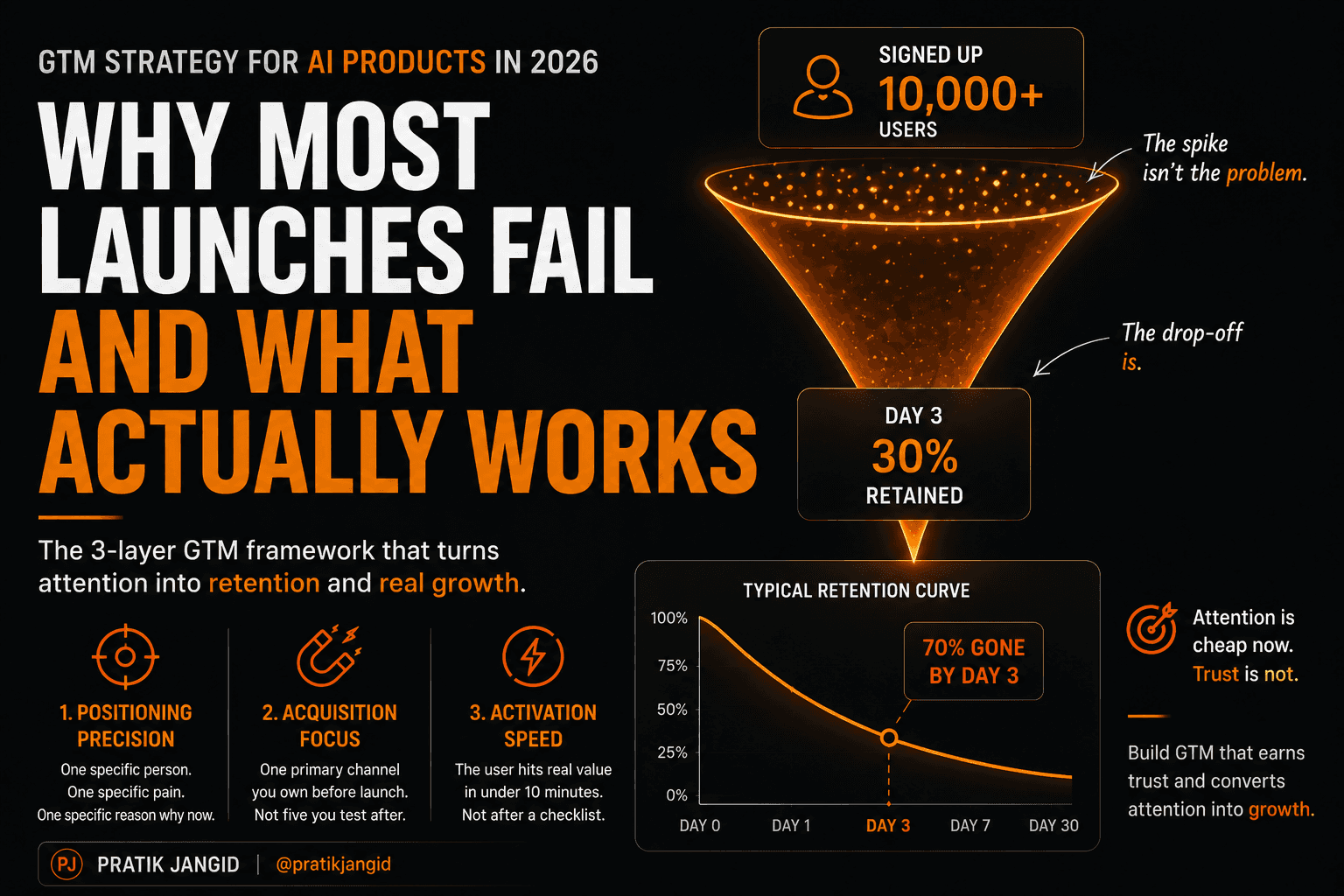
Most AI products in 2026 do not fail at launch. They fail 10 minutes after it.
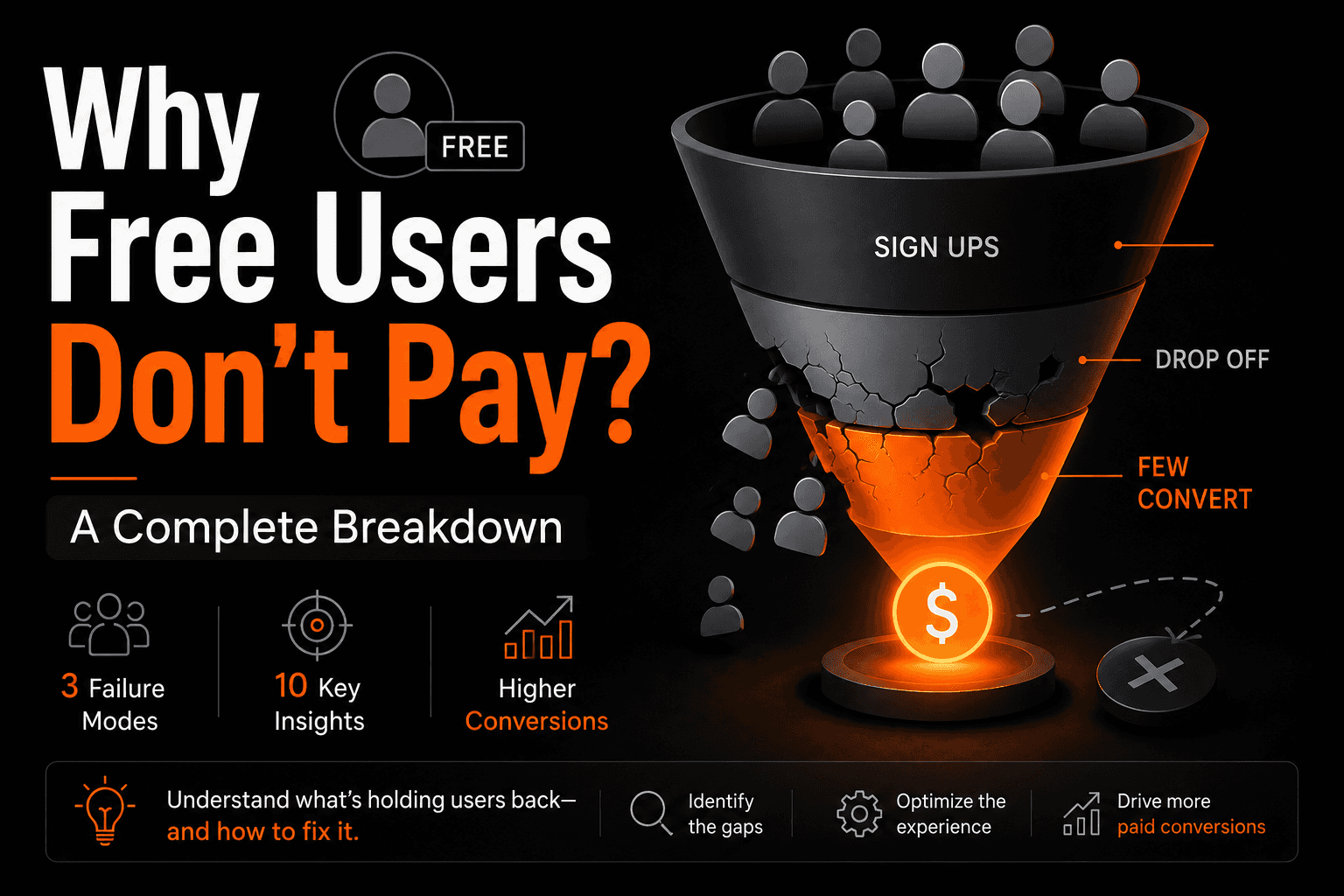
The spike happens. Product Hunt, a Reddit thread, a LinkedIn post. Signups come in fast. Then 70% of those users open the product, find nothing obvious to do, and never return.
This is not a distribution problem. Distribution is cheap now. Every AI tool gets a moment of attention. The problem is what happens after that moment, and most GTM strategies are not built to handle it.
This post breaks down what has changed in GTM for AI products, the three-layer framework that separates launches that hold from launches that spike and die, and the single metric most teams never measure but should.
What Changed in GTM Between 2020 and 2026
The 2020 GTM playbook went: pick a segment, define your ICP, choose a channel, write messaging, launch. That model still works for some categories. For AI products in 2026, it is dangerously incomplete.
The trust gap is now the primary GTM variable
In 2020, the GTM problem was attention. Get people to notice you. In 2026, attention arrives easily. The problem is trust.
Users have tried dozens of AI tools that overpromised and underdelivered. They open new products skeptical, not curious. Features do not fix this skepticism. Fast, undeniable proof does.
Your GTM motion has to answer, "why should I believe this works" before it earns the right to answer, "what does this do."
Distribution is now a product decision, not a marketing decision
The products winning on distribution in 2026 built it into the core product action. Sharing a design file creates a new user. Sending a recorded video makes the recipient sign up to watch it. A scheduling link carries the product brand to every calendar invite.
If your product's core action has no natural sharing moment or community touchpoint, your GTM is fighting uphill from the first week. The best GTM teams in 2026 sit in product sprints, not just campaign planning calls.
GTM cycles have compressed
The old cycle: awareness to consideration to decision to onboarding. Ninety days.
The 2026 cycle for AI products under $500/month ACV: discovery to try to value to pay. This can happen in twenty minutes if the product and GTM motion are aligned. This is why interactive demos, free-tier experiences, and frictionless onboarding have replaced whitepapers and sales calls for most AI-first products.
The GTM question that matters in 2026 is not 'how do we get more signups.' It is 'how fast does a new user believe this product is for them.'
The 3-Layer GTM Framework for AI Products
Most GTM strategies collapse because they treat launch as a single event. It is not. GTM is a system with three layers. Miss one and the other two leak.
Layer 1: Positioning precision
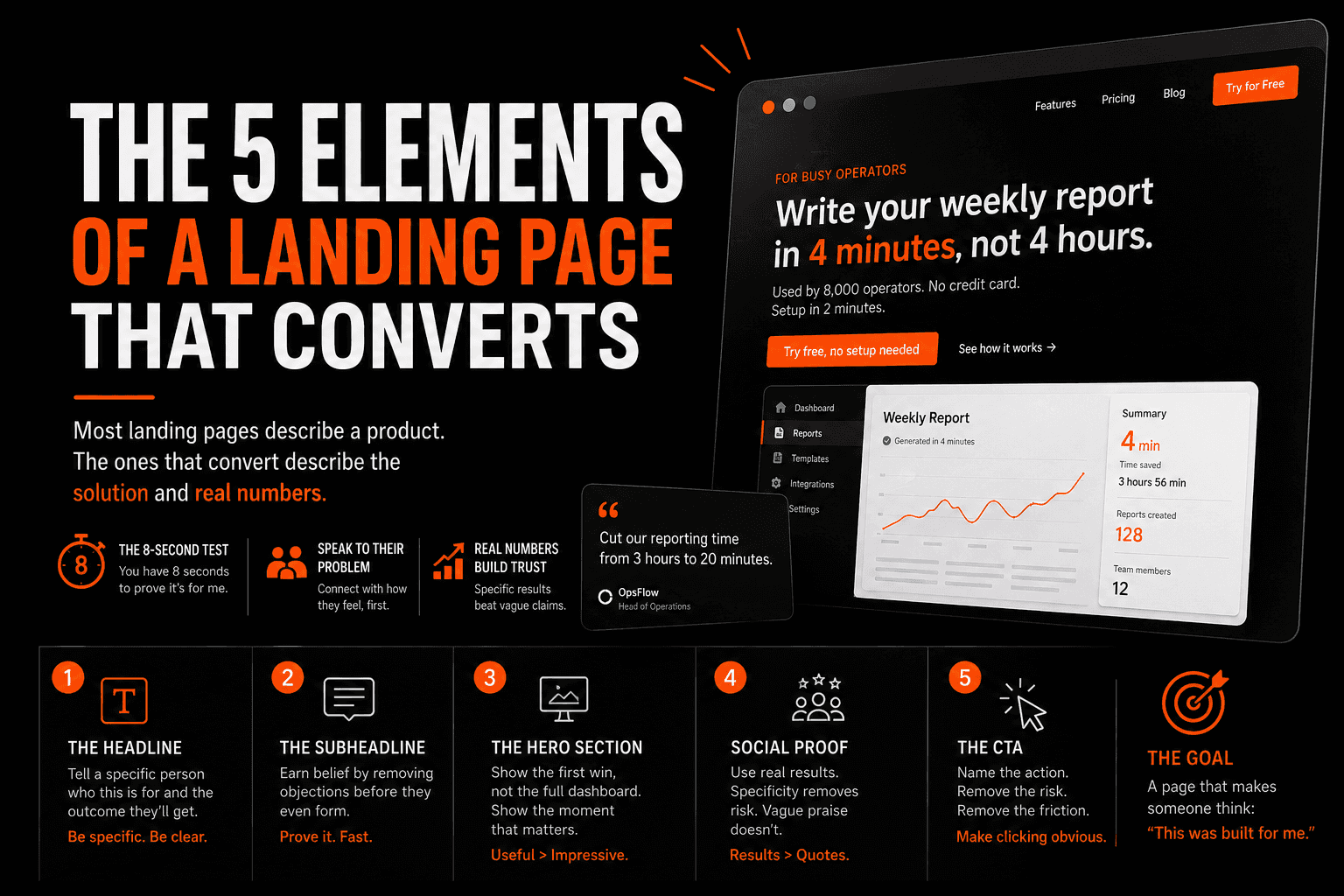
Positioning for AI products in 2026 has to be built around one specific person with one specific pain, not a category claim.
"AI productivity tool for teams" is not positioning. It is a category description. Anyone in the category could say the same thing.
Positioning that works sounds like this: "For ops leads at 20 to 50 person SaaS companies who waste six hours a week pulling data from tools that do not talk to each other."
The second version makes one specific person stop scrolling. The first version makes nobody do anything.
Precision also answers a timing question most teams skip: why now? Timing is a GTM variable. If your positioning cannot articulate why this product matters in 2026 specifically, you are leaving the most powerful trust signal on the table.
Layer 2: Acquisition focus
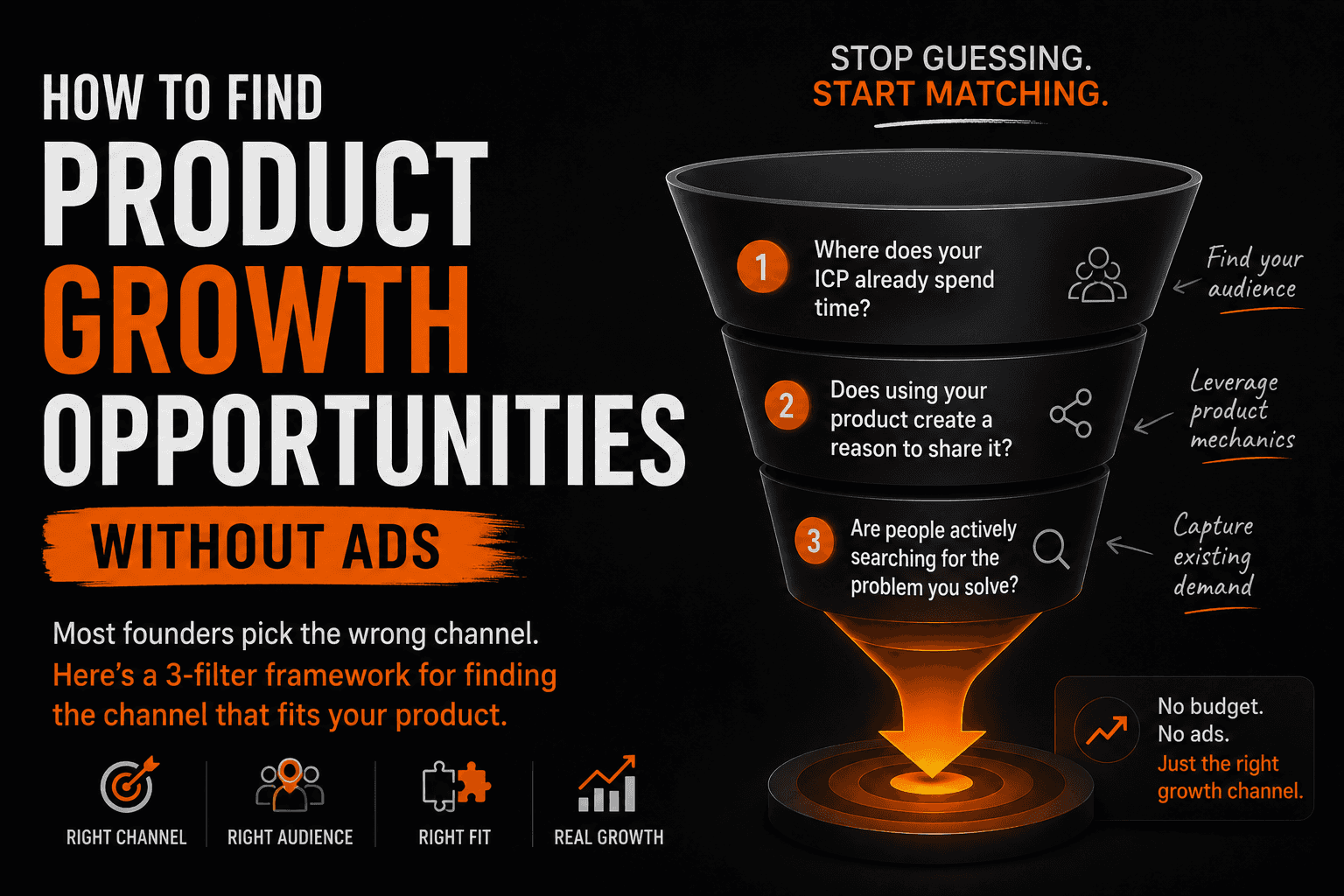
One primary channel owned completely before launch outperforms five channels tested simultaneously after it.
This is not a resource argument. It is a trust argument. A channel delivers users with a specific starting trust level. Someone who finds your product through a community they already belong to starts at 70% trust. Someone who clicked a cold ad starts at 15%.
Your activation experience needs to be calibrated to the trust level the channel delivers. When you spread across five channels, you cannot calibrate for any of them, and your activation numbers reflect that.
The four channel categories and what each delivers:
• Owned channels (email list, blog, social following): Slow to build, highest long-term value, immune to algorithm changes
• Earned channels (press, word of mouth, community mentions, organic SEO): Not guaranteed, not scalable on demand, but highest user trust on arrival
• Paid channels (Google, Meta, LinkedIn Ads): Immediate and scalable, stops when you stop paying, works only after activation is solid
• Product channels (sharing a file, sending a link, inviting a collaborator): Highest leverage for AI products, most underbuilt by early-stage teams
Pick one primary channel before launch. Own it. Add a second only after the first is producing consistent, qualified users.
Layer 3: Activation speed
Activation is the first moment a user thinks: yes, this is for me.
Most products have six or more steps between signup and that moment. The best products compress it to two.
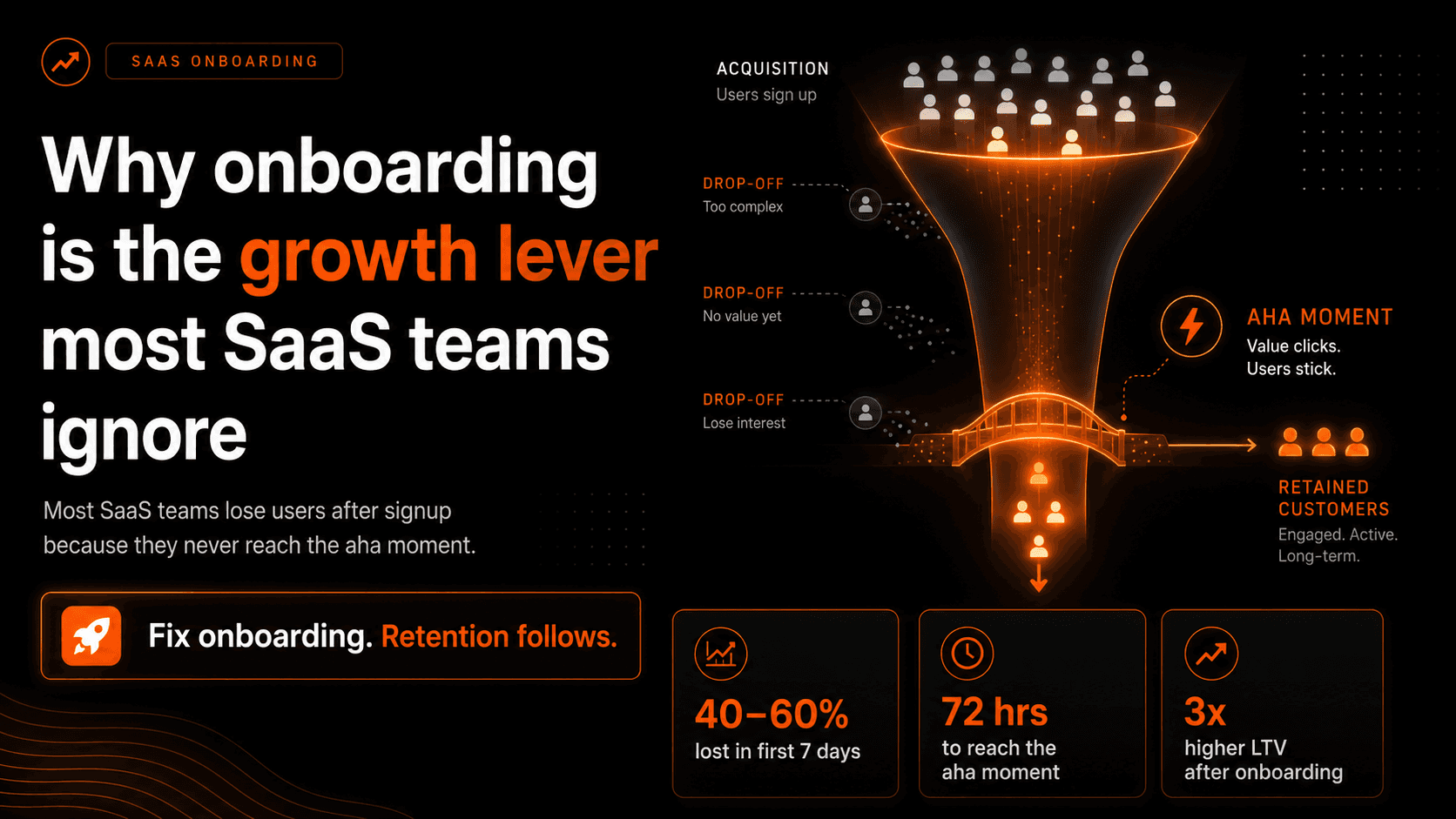
The time between signup and the activation moment is the most important GTM metric most teams never measure. If you do not know the number for your product, you have not measured it. If it is more than ten minutes, you have not fixed it.
Activation time is your real GTM score. It tells you whether the channel attention you generate can convert into retained users, or whether you are pouring acquisition budget into a broken funnel.
The Mistake That Kills Most AI Product Launches
Scaling acquisition before fixing activation.
More ads. More content. More outreach. Same broken first-run experience.
This is the most common and most expensive GTM mistake in 2026. The logic behind it feels reasonable: if signups are low, get more signups. But if the activation rate is 20%, doubling signups gives you twice as many users who also leave. It does not fix the underlying problem.
The diagnostic question is: what percentage of users who sign up hit the activation moment within their first session?
If that number is below 40%, you have a product-GTM alignment problem. Fix that before you scale any acquisition channel.
What Product-GTM Alignment Actually Means
Most teams treat GTM as a marketing responsibility and onboarding as a product responsibility. In 2026, that split is a structural flaw.
GTM and onboarding are the same strategy. Your launch motion ends the moment a user signs up. Your actual GTM starts the moment they open the product.
Product-GTM alignment means:
1. The user your acquisition channel attracts is the same user your product was built to serve
2. The pain your messaging describes is the pain your product solves in the first session
3. The activation moment is designed, measured, and iterated on with the same rigor as the acquisition channel
When these three are true, retention numbers change fast. When any one is missing, the other two cannot compensate.
The GTM Checklist Before Your Next AI Product Launch
Run this before launch, not after.
• Can you name the one specific person this product is for, including their job title, company size, and the exact task they struggle with?
• Does your positioning answer why this product matters in 2026 specifically?
• Have you chosen one primary acquisition channel and built a presence there before launch day?
• Have you mapped the path from signup to activation moment and counted the steps?
• Have you run five people through the onboarding and timed how long it takes each one to hit the activation moment?
• Is your messaging consistent from the first ad or post a user sees to the first screen they see inside the product?
• Do you have a plan for the user who signs up but does not activate in the first session?
If any of these are no, that is where your GTM will leak.
How This Applies to AI Products Specifically
AI products carry a trust deficit that SaaS products from five years ago did not have to manage. Users have seen demos that looked impressive and products that delivered nothing in daily use.
This makes two things non-negotiable for AI product GTM in 2026:
Demo-first distribution
Let users see the output before they sign up. Not a screenshot. Not a video. The actual output from a real prompt or a real task. If users can experience the core value before creating an account, your activation rate will be higher than almost every competitor who gates the experience behind signup.
Use-case specificity over capability breadth
A tool that "generates marketing copy, code, emails, reports, and more" signals to users that it probably does none of these things exceptionally well. A tool that "writes product launch emails for B2B SaaS founders" signals that someone thought carefully about one specific problem.
Narrow positioning feels like it limits your market. In 2026, it is what gets you trusted by the market you are actually targeting.
The One Number to Track
If you track nothing else from this post, track this: the median time from signup to activation moment, per acquisition channel.
This number tells you whether your GTM system is working as one integrated motion or as two disconnected halves. It tells you which channels are delivering the right users. It tells you where your onboarding is losing people who should have stayed.
Most teams never measure it. The teams that do fix their launches faster and waste less budget doing it.
The fastest your product takes a new user to value is your real GTM score. Everything else is a leading indicator of that number.
Frequently Asked Questions
What is a GTM strategy for an AI product?
A GTM (go-to-market) strategy for an AI product is a plan that defines how the right user discovers, understands, tries, and pays for the product in a repeatable way. For AI products in 2026, it includes three layers: positioning precision (who it is for and why now), acquisition focus (one primary channel owned before launch), and activation speed (the path from signup to first value moment).
How is GTM for AI products different from traditional SaaS GTM?
Traditional SaaS GTM assumed users were curious and willing to explore. AI product GTM in 2026 has to account for a trust deficit. Users have been burned by tools that overpromised. GTM motions that worked in 2020 (feature announcements, broad targeting, long onboarding checklists) underperform now. Demo-first distribution, narrow ICP positioning, and fast activation are the differentiating factors.
What is product-GTM alignment?
Product-GTM alignment means the user your acquisition channel attracts is the same user your product was built to serve, the pain your messaging describes is the pain your product solves in the first session, and the activation moment is measured and iterated on with the same rigor as the acquisition channel. When all three are true, retention improves significantly.
What is an activation moment?
The activation moment is the first time a user experiences real value from a product and thinks 'yes, this is for me.' For most AI products, this should happen within the first ten minutes of a user's first session. Products that compress the time to activation retain more users and convert free users to paid at higher rates.
How do you measure GTM effectiveness for an AI product?
The most important metric is median time from signup to activation moment, broken down by acquisition channel. Secondary metrics include activation rate (percentage of signups who hit the activation moment in their first session), D7 retention (percentage of activated users still using the product seven days later), and free-to-paid conversion rate by channel.
What to Do Next
Pick one question from the GTM checklist above that you cannot answer confidently. That is the one to fix before anything else.
If you are building or launching an AI product and want to think through your GTM motion, the frameworks in this post apply directly. Start with positioning. Get the ICP specific enough that one person reads it and thinks it was written for them. Then pick one channel. Then compress activation.
In that order. Not simultaneously.
Most AI products in 2026 do not fail at launch. They fail 10 minutes after it.
The spike happens. Product Hunt, a Reddit thread, a LinkedIn post. Signups come in fast. Then 70% of those users open the product, find nothing obvious to do, and never return.
This is not a distribution problem. Distribution is cheap now. Every AI tool gets a moment of attention. The problem is what happens after that moment, and most GTM strategies are not built to handle it.
This post breaks down what has changed in GTM for AI products, the three-layer framework that separates launches that hold from launches that spike and die, and the single metric most teams never measure but should.
What Changed in GTM Between 2020 and 2026
The 2020 GTM playbook went: pick a segment, define your ICP, choose a channel, write messaging, launch. That model still works for some categories. For AI products in 2026, it is dangerously incomplete.
The trust gap is now the primary GTM variable
In 2020, the GTM problem was attention. Get people to notice you. In 2026, attention arrives easily. The problem is trust.
Users have tried dozens of AI tools that overpromised and underdelivered. They open new products skeptical, not curious. Features do not fix this skepticism. Fast, undeniable proof does.
Your GTM motion has to answer, "why should I believe this works" before it earns the right to answer, "what does this do."
Distribution is now a product decision, not a marketing decision
The products winning on distribution in 2026 built it into the core product action. Sharing a design file creates a new user. Sending a recorded video makes the recipient sign up to watch it. A scheduling link carries the product brand to every calendar invite.
If your product's core action has no natural sharing moment or community touchpoint, your GTM is fighting uphill from the first week. The best GTM teams in 2026 sit in product sprints, not just campaign planning calls.
GTM cycles have compressed
The old cycle: awareness to consideration to decision to onboarding. Ninety days.
The 2026 cycle for AI products under $500/month ACV: discovery to try to value to pay. This can happen in twenty minutes if the product and GTM motion are aligned. This is why interactive demos, free-tier experiences, and frictionless onboarding have replaced whitepapers and sales calls for most AI-first products.
The GTM question that matters in 2026 is not 'how do we get more signups.' It is 'how fast does a new user believe this product is for them.'
The 3-Layer GTM Framework for AI Products
Most GTM strategies collapse because they treat launch as a single event. It is not. GTM is a system with three layers. Miss one and the other two leak.
Layer 1: Positioning precision
Positioning for AI products in 2026 has to be built around one specific person with one specific pain, not a category claim.
"AI productivity tool for teams" is not positioning. It is a category description. Anyone in the category could say the same thing.
Positioning that works sounds like this: "For ops leads at 20 to 50 person SaaS companies who waste six hours a week pulling data from tools that do not talk to each other."
The second version makes one specific person stop scrolling. The first version makes nobody do anything.
Precision also answers a timing question most teams skip: why now? Timing is a GTM variable. If your positioning cannot articulate why this product matters in 2026 specifically, you are leaving the most powerful trust signal on the table.
Layer 2: Acquisition focus
One primary channel owned completely before launch outperforms five channels tested simultaneously after it.
This is not a resource argument. It is a trust argument. A channel delivers users with a specific starting trust level. Someone who finds your product through a community they already belong to starts at 70% trust. Someone who clicked a cold ad starts at 15%.
Your activation experience needs to be calibrated to the trust level the channel delivers. When you spread across five channels, you cannot calibrate for any of them, and your activation numbers reflect that.
The four channel categories and what each delivers:
• Owned channels (email list, blog, social following): Slow to build, highest long-term value, immune to algorithm changes
• Earned channels (press, word of mouth, community mentions, organic SEO): Not guaranteed, not scalable on demand, but highest user trust on arrival
• Paid channels (Google, Meta, LinkedIn Ads): Immediate and scalable, stops when you stop paying, works only after activation is solid
• Product channels (sharing a file, sending a link, inviting a collaborator): Highest leverage for AI products, most underbuilt by early-stage teams
Pick one primary channel before launch. Own it. Add a second only after the first is producing consistent, qualified users.
Layer 3: Activation speed
Activation is the first moment a user thinks: yes, this is for me.
Most products have six or more steps between signup and that moment. The best products compress it to two.
The time between signup and the activation moment is the most important GTM metric most teams never measure. If you do not know the number for your product, you have not measured it. If it is more than ten minutes, you have not fixed it.
Activation time is your real GTM score. It tells you whether the channel attention you generate can convert into retained users, or whether you are pouring acquisition budget into a broken funnel.
The Mistake That Kills Most AI Product Launches
Scaling acquisition before fixing activation.
More ads. More content. More outreach. Same broken first-run experience.
This is the most common and most expensive GTM mistake in 2026. The logic behind it feels reasonable: if signups are low, get more signups. But if the activation rate is 20%, doubling signups gives you twice as many users who also leave. It does not fix the underlying problem.
The diagnostic question is: what percentage of users who sign up hit the activation moment within their first session?
If that number is below 40%, you have a product-GTM alignment problem. Fix that before you scale any acquisition channel.
What Product-GTM Alignment Actually Means
Most teams treat GTM as a marketing responsibility and onboarding as a product responsibility. In 2026, that split is a structural flaw.
GTM and onboarding are the same strategy. Your launch motion ends the moment a user signs up. Your actual GTM starts the moment they open the product.
Product-GTM alignment means:
1. The user your acquisition channel attracts is the same user your product was built to serve
2. The pain your messaging describes is the pain your product solves in the first session
3. The activation moment is designed, measured, and iterated on with the same rigor as the acquisition channel
When these three are true, retention numbers change fast. When any one is missing, the other two cannot compensate.
The GTM Checklist Before Your Next AI Product Launch
Run this before launch, not after.
• Can you name the one specific person this product is for, including their job title, company size, and the exact task they struggle with?
• Does your positioning answer why this product matters in 2026 specifically?
• Have you chosen one primary acquisition channel and built a presence there before launch day?
• Have you mapped the path from signup to activation moment and counted the steps?
• Have you run five people through the onboarding and timed how long it takes each one to hit the activation moment?
• Is your messaging consistent from the first ad or post a user sees to the first screen they see inside the product?
• Do you have a plan for the user who signs up but does not activate in the first session?
If any of these are no, that is where your GTM will leak.
How This Applies to AI Products Specifically
AI products carry a trust deficit that SaaS products from five years ago did not have to manage. Users have seen demos that looked impressive and products that delivered nothing in daily use.
This makes two things non-negotiable for AI product GTM in 2026:
Demo-first distribution
Let users see the output before they sign up. Not a screenshot. Not a video. The actual output from a real prompt or a real task. If users can experience the core value before creating an account, your activation rate will be higher than almost every competitor who gates the experience behind signup.
Use-case specificity over capability breadth
A tool that "generates marketing copy, code, emails, reports, and more" signals to users that it probably does none of these things exceptionally well. A tool that "writes product launch emails for B2B SaaS founders" signals that someone thought carefully about one specific problem.
Narrow positioning feels like it limits your market. In 2026, it is what gets you trusted by the market you are actually targeting.
The One Number to Track
If you track nothing else from this post, track this: the median time from signup to activation moment, per acquisition channel.
This number tells you whether your GTM system is working as one integrated motion or as two disconnected halves. It tells you which channels are delivering the right users. It tells you where your onboarding is losing people who should have stayed.
Most teams never measure it. The teams that do fix their launches faster and waste less budget doing it.
The fastest your product takes a new user to value is your real GTM score. Everything else is a leading indicator of that number.
Frequently Asked Questions
What is a GTM strategy for an AI product?
A GTM (go-to-market) strategy for an AI product is a plan that defines how the right user discovers, understands, tries, and pays for the product in a repeatable way. For AI products in 2026, it includes three layers: positioning precision (who it is for and why now), acquisition focus (one primary channel owned before launch), and activation speed (the path from signup to first value moment).
How is GTM for AI products different from traditional SaaS GTM?
Traditional SaaS GTM assumed users were curious and willing to explore. AI product GTM in 2026 has to account for a trust deficit. Users have been burned by tools that overpromised. GTM motions that worked in 2020 (feature announcements, broad targeting, long onboarding checklists) underperform now. Demo-first distribution, narrow ICP positioning, and fast activation are the differentiating factors.
What is product-GTM alignment?
Product-GTM alignment means the user your acquisition channel attracts is the same user your product was built to serve, the pain your messaging describes is the pain your product solves in the first session, and the activation moment is measured and iterated on with the same rigor as the acquisition channel. When all three are true, retention improves significantly.
What is an activation moment?
The activation moment is the first time a user experiences real value from a product and thinks 'yes, this is for me.' For most AI products, this should happen within the first ten minutes of a user's first session. Products that compress the time to activation retain more users and convert free users to paid at higher rates.
How do you measure GTM effectiveness for an AI product?
The most important metric is median time from signup to activation moment, broken down by acquisition channel. Secondary metrics include activation rate (percentage of signups who hit the activation moment in their first session), D7 retention (percentage of activated users still using the product seven days later), and free-to-paid conversion rate by channel.
What to Do Next
Pick one question from the GTM checklist above that you cannot answer confidently. That is the one to fix before anything else.
If you are building or launching an AI product and want to think through your GTM motion, the frameworks in this post apply directly. Start with positioning. Get the ICP specific enough that one person reads it and thinks it was written for them. Then pick one channel. Then compress activation.
In that order. Not simultaneously.
Most AI products in 2026 do not fail at launch. They fail 10 minutes after it.
The spike happens. Product Hunt, a Reddit thread, a LinkedIn post. Signups come in fast. Then 70% of those users open the product, find nothing obvious to do, and never return.
This is not a distribution problem. Distribution is cheap now. Every AI tool gets a moment of attention. The problem is what happens after that moment, and most GTM strategies are not built to handle it.
This post breaks down what has changed in GTM for AI products, the three-layer framework that separates launches that hold from launches that spike and die, and the single metric most teams never measure but should.
What Changed in GTM Between 2020 and 2026
The 2020 GTM playbook went: pick a segment, define your ICP, choose a channel, write messaging, launch. That model still works for some categories. For AI products in 2026, it is dangerously incomplete.
The trust gap is now the primary GTM variable
In 2020, the GTM problem was attention. Get people to notice you. In 2026, attention arrives easily. The problem is trust.
Users have tried dozens of AI tools that overpromised and underdelivered. They open new products skeptical, not curious. Features do not fix this skepticism. Fast, undeniable proof does.
Your GTM motion has to answer, "why should I believe this works" before it earns the right to answer, "what does this do."
Distribution is now a product decision, not a marketing decision
The products winning on distribution in 2026 built it into the core product action. Sharing a design file creates a new user. Sending a recorded video makes the recipient sign up to watch it. A scheduling link carries the product brand to every calendar invite.
If your product's core action has no natural sharing moment or community touchpoint, your GTM is fighting uphill from the first week. The best GTM teams in 2026 sit in product sprints, not just campaign planning calls.
GTM cycles have compressed
The old cycle: awareness to consideration to decision to onboarding. Ninety days.
The 2026 cycle for AI products under $500/month ACV: discovery to try to value to pay. This can happen in twenty minutes if the product and GTM motion are aligned. This is why interactive demos, free-tier experiences, and frictionless onboarding have replaced whitepapers and sales calls for most AI-first products.
The GTM question that matters in 2026 is not 'how do we get more signups.' It is 'how fast does a new user believe this product is for them.'
The 3-Layer GTM Framework for AI Products
Most GTM strategies collapse because they treat launch as a single event. It is not. GTM is a system with three layers. Miss one and the other two leak.
Layer 1: Positioning precision
Positioning for AI products in 2026 has to be built around one specific person with one specific pain, not a category claim.
"AI productivity tool for teams" is not positioning. It is a category description. Anyone in the category could say the same thing.
Positioning that works sounds like this: "For ops leads at 20 to 50 person SaaS companies who waste six hours a week pulling data from tools that do not talk to each other."
The second version makes one specific person stop scrolling. The first version makes nobody do anything.
Precision also answers a timing question most teams skip: why now? Timing is a GTM variable. If your positioning cannot articulate why this product matters in 2026 specifically, you are leaving the most powerful trust signal on the table.
Layer 2: Acquisition focus
One primary channel owned completely before launch outperforms five channels tested simultaneously after it.
This is not a resource argument. It is a trust argument. A channel delivers users with a specific starting trust level. Someone who finds your product through a community they already belong to starts at 70% trust. Someone who clicked a cold ad starts at 15%.
Your activation experience needs to be calibrated to the trust level the channel delivers. When you spread across five channels, you cannot calibrate for any of them, and your activation numbers reflect that.
The four channel categories and what each delivers:
• Owned channels (email list, blog, social following): Slow to build, highest long-term value, immune to algorithm changes
• Earned channels (press, word of mouth, community mentions, organic SEO): Not guaranteed, not scalable on demand, but highest user trust on arrival
• Paid channels (Google, Meta, LinkedIn Ads): Immediate and scalable, stops when you stop paying, works only after activation is solid
• Product channels (sharing a file, sending a link, inviting a collaborator): Highest leverage for AI products, most underbuilt by early-stage teams
Pick one primary channel before launch. Own it. Add a second only after the first is producing consistent, qualified users.
Layer 3: Activation speed
Activation is the first moment a user thinks: yes, this is for me.
Most products have six or more steps between signup and that moment. The best products compress it to two.
The time between signup and the activation moment is the most important GTM metric most teams never measure. If you do not know the number for your product, you have not measured it. If it is more than ten minutes, you have not fixed it.
Activation time is your real GTM score. It tells you whether the channel attention you generate can convert into retained users, or whether you are pouring acquisition budget into a broken funnel.
The Mistake That Kills Most AI Product Launches
Scaling acquisition before fixing activation.
More ads. More content. More outreach. Same broken first-run experience.
This is the most common and most expensive GTM mistake in 2026. The logic behind it feels reasonable: if signups are low, get more signups. But if the activation rate is 20%, doubling signups gives you twice as many users who also leave. It does not fix the underlying problem.
The diagnostic question is: what percentage of users who sign up hit the activation moment within their first session?
If that number is below 40%, you have a product-GTM alignment problem. Fix that before you scale any acquisition channel.
What Product-GTM Alignment Actually Means
Most teams treat GTM as a marketing responsibility and onboarding as a product responsibility. In 2026, that split is a structural flaw.
GTM and onboarding are the same strategy. Your launch motion ends the moment a user signs up. Your actual GTM starts the moment they open the product.
Product-GTM alignment means:
1. The user your acquisition channel attracts is the same user your product was built to serve
2. The pain your messaging describes is the pain your product solves in the first session
3. The activation moment is designed, measured, and iterated on with the same rigor as the acquisition channel
When these three are true, retention numbers change fast. When any one is missing, the other two cannot compensate.
The GTM Checklist Before Your Next AI Product Launch
Run this before launch, not after.
• Can you name the one specific person this product is for, including their job title, company size, and the exact task they struggle with?
• Does your positioning answer why this product matters in 2026 specifically?
• Have you chosen one primary acquisition channel and built a presence there before launch day?
• Have you mapped the path from signup to activation moment and counted the steps?
• Have you run five people through the onboarding and timed how long it takes each one to hit the activation moment?
• Is your messaging consistent from the first ad or post a user sees to the first screen they see inside the product?
• Do you have a plan for the user who signs up but does not activate in the first session?
If any of these are no, that is where your GTM will leak.
How This Applies to AI Products Specifically
AI products carry a trust deficit that SaaS products from five years ago did not have to manage. Users have seen demos that looked impressive and products that delivered nothing in daily use.
This makes two things non-negotiable for AI product GTM in 2026:
Demo-first distribution
Let users see the output before they sign up. Not a screenshot. Not a video. The actual output from a real prompt or a real task. If users can experience the core value before creating an account, your activation rate will be higher than almost every competitor who gates the experience behind signup.
Use-case specificity over capability breadth
A tool that "generates marketing copy, code, emails, reports, and more" signals to users that it probably does none of these things exceptionally well. A tool that "writes product launch emails for B2B SaaS founders" signals that someone thought carefully about one specific problem.
Narrow positioning feels like it limits your market. In 2026, it is what gets you trusted by the market you are actually targeting.
The One Number to Track
If you track nothing else from this post, track this: the median time from signup to activation moment, per acquisition channel.
This number tells you whether your GTM system is working as one integrated motion or as two disconnected halves. It tells you which channels are delivering the right users. It tells you where your onboarding is losing people who should have stayed.
Most teams never measure it. The teams that do fix their launches faster and waste less budget doing it.
The fastest your product takes a new user to value is your real GTM score. Everything else is a leading indicator of that number.
Frequently Asked Questions
What is a GTM strategy for an AI product?
A GTM (go-to-market) strategy for an AI product is a plan that defines how the right user discovers, understands, tries, and pays for the product in a repeatable way. For AI products in 2026, it includes three layers: positioning precision (who it is for and why now), acquisition focus (one primary channel owned before launch), and activation speed (the path from signup to first value moment).
How is GTM for AI products different from traditional SaaS GTM?
Traditional SaaS GTM assumed users were curious and willing to explore. AI product GTM in 2026 has to account for a trust deficit. Users have been burned by tools that overpromised. GTM motions that worked in 2020 (feature announcements, broad targeting, long onboarding checklists) underperform now. Demo-first distribution, narrow ICP positioning, and fast activation are the differentiating factors.
What is product-GTM alignment?
Product-GTM alignment means the user your acquisition channel attracts is the same user your product was built to serve, the pain your messaging describes is the pain your product solves in the first session, and the activation moment is measured and iterated on with the same rigor as the acquisition channel. When all three are true, retention improves significantly.
What is an activation moment?
The activation moment is the first time a user experiences real value from a product and thinks 'yes, this is for me.' For most AI products, this should happen within the first ten minutes of a user's first session. Products that compress the time to activation retain more users and convert free users to paid at higher rates.
How do you measure GTM effectiveness for an AI product?
The most important metric is median time from signup to activation moment, broken down by acquisition channel. Secondary metrics include activation rate (percentage of signups who hit the activation moment in their first session), D7 retention (percentage of activated users still using the product seven days later), and free-to-paid conversion rate by channel.
What to Do Next
Pick one question from the GTM checklist above that you cannot answer confidently. That is the one to fix before anything else.
If you are building or launching an AI product and want to think through your GTM motion, the frameworks in this post apply directly. Start with positioning. Get the ICP specific enough that one person reads it and thinks it was written for them. Then pick one channel. Then compress activation.
In that order. Not simultaneously.
Blogs By Prateek
Real frameworks, honest breakdowns, and hard-won lessons from 6 years of launching and growing AI products.

LET'S WORK
TOGETHER
LET'S WORK
TOGETHER
@2026, All Rights Reserved